

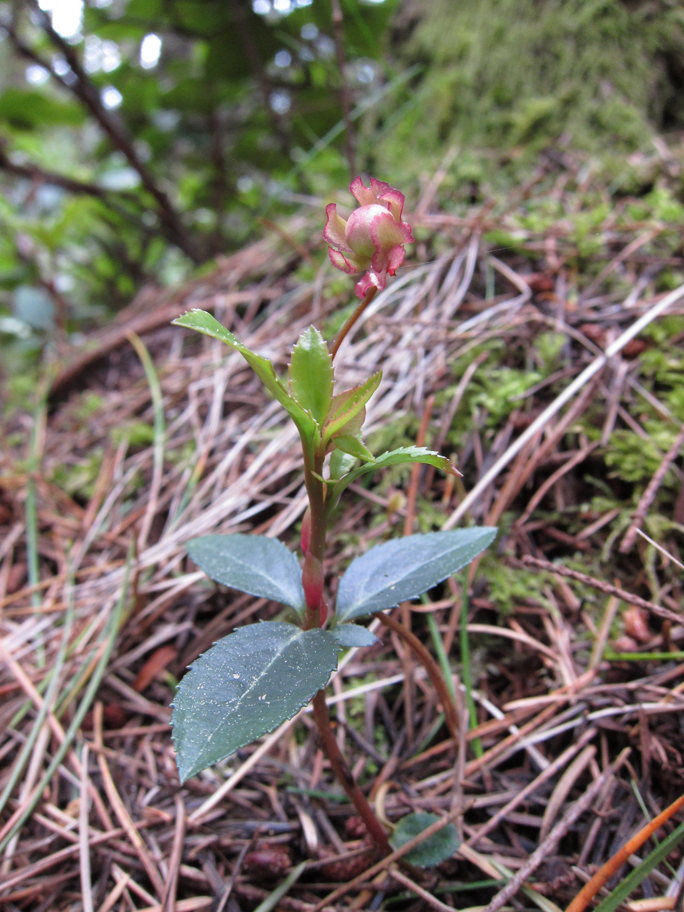
Little Prince’s Pine, Chimaphila menziesii, is the little brother of the delightfully named Pipsissewa. This tiny wildflower is in the family Ericaceae and thus related to rhododendrons & azaleas, manzanita, salal, blueberries & huckleberries, mountain heathers, and a fascinating bunch of saprophytic plants like Indian pipes and pinedrops.
Although this wildflower is not uncommon in the mountains of the Northwest, it’s not often found in the San Juans. According to Wild Plants of the San Juan Islands, it is rare beyond the slopes of Mount Constitution on Orcas Island. Perhaps the scarcity of this plant is due to the dryer environment of the islands, but it may also be related to the fact that this plant is very sensitive to both fire1 and clear-cutting. As Lopez Island has long seen the effects of both repeated burning and logging, there must be scant refuge here for this plant.
Last fall, however, I was building a trail on the back of the property where I live. I saw a tiny evergreen plant that I had never noticed before on Lopez, despite may hours walking and working the woods here. I took a look through my field guides and surmised that the plant may be one of the Chimaphilas. As the winter progressed, I found, in the same woods, a patch of these little charmers growing around the base of a Douglas fir. I also found several while I was building a trail on a friend’s land down near Davis Bay.
Since discovering these three instances of Little Prince’s Pine, I’m beginning to think that this plant might be present on Lopez in far greater numbers than has been supposed. Tiny as it is, it’s easy to pass by – you pretty much have to have your nose to the ground in order to notice it. But I’m keeping my eyes peeled, and hope to find it elsewhere – especially on Lopez Hill.
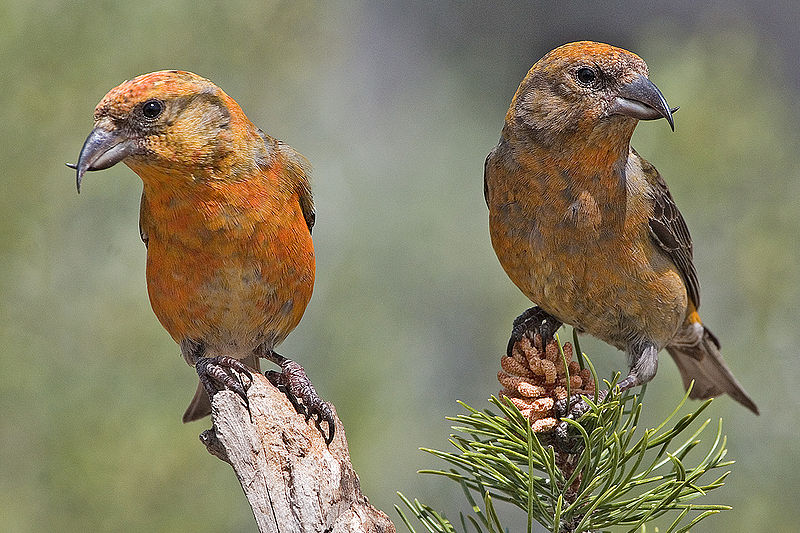
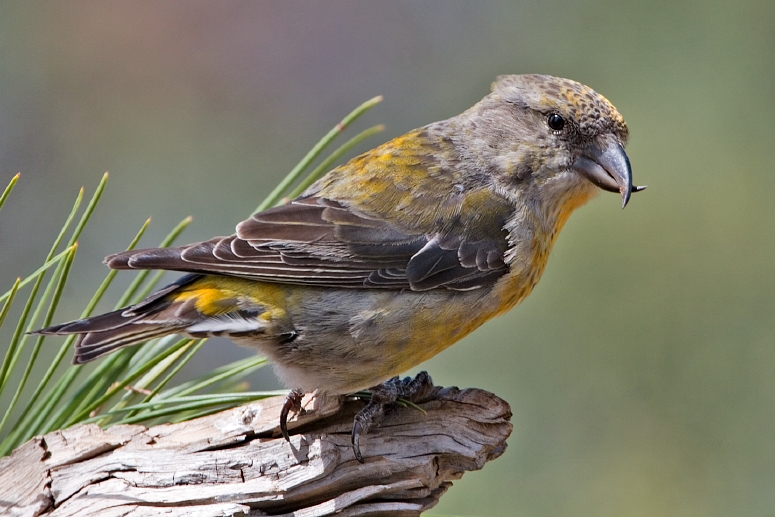
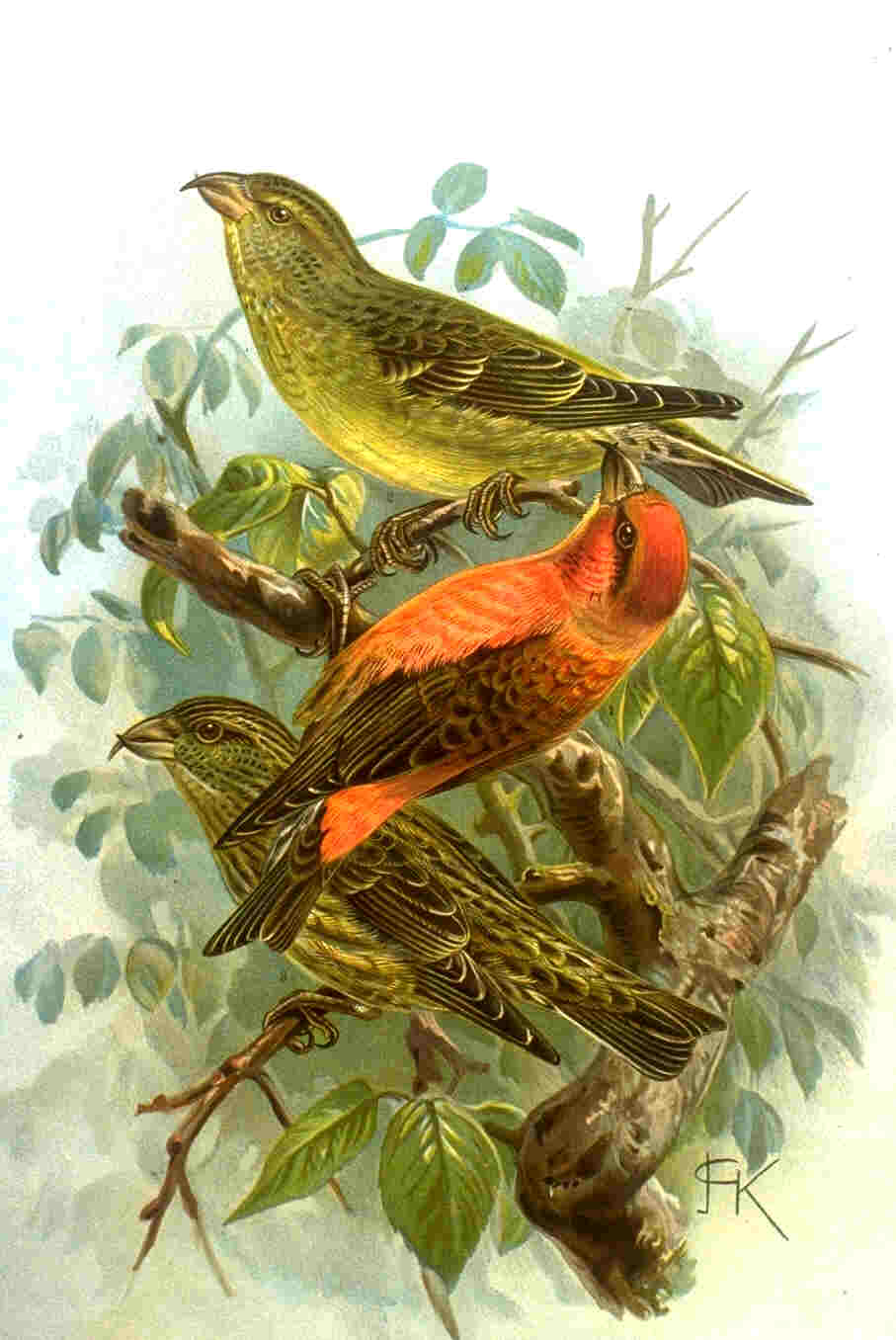
 Curvirostra